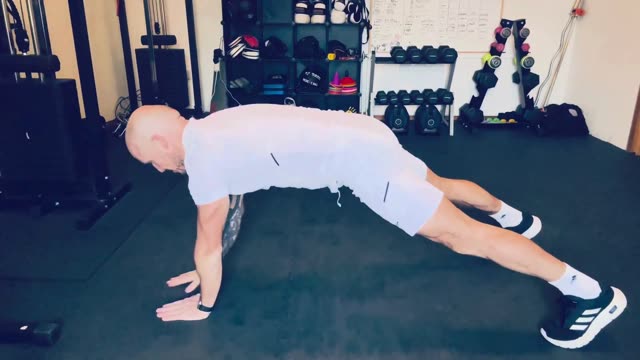
The trouble with plank workouts is that they usually save the longest hold for the end, when your arms have already clocked off. This one does the opposite.
It's a pyramid: five plank variations where the work climbs — 20 seconds, 30, then a 40-second peak on the classic forearm plank — and then comes back down with two shorter moving planks. You hit the big hold in the middle, while you've still got something to give it.
No equipment, no crunches, and a video of me demonstrating every variation right here on the page. Knees down at any point is the right version, not a lesser one.
How to use this workout
One rule above all: a straight line beats a long hold. The moment your hips sag or pike, rest early and reset — ten honest seconds do more for you than thirty saggy ones.
The workout
How it should feel — and when to make it harder
Your middle should feel braced and worked, your shoulders warm, and the 40-second peak should be a genuine test without being a horror show. A trembling belly is your muscles learning, not failing. When two rounds feel steady, stretch the peak hold before adding anything fancier. And if you've got a health condition or you're on medication, have a quick word with your GP before you start — costs nothing, buys peace of mind.
Want more plank work at a flat, steady pace? Try my 5 beginner plank variations next.
Quick questions
Is 40 seconds too long for a beginner plank?
At the peak, with two moves already done, it's a challenge — that's the point. Drop to your knees for it, or hold for 20 and rest the difference. Both count, and next week's peak will feel shorter.
Why do planks in a pyramid?
Because it puts the longest hold in the middle, where you're warm but not wrecked. Finishing on the short moves means you end the workout feeling capable — which is exactly the feeling that gets you back on Thursday.
Are planks safe for my back?
Done with a straight line from head to heels, planks are one of the kindest core exercises for your back. If your lower back aches, your hips have likely sagged — rest, reset, shorten the hold.