I wrote the other week about how I run sessions for clients with fibromyalgia — the pacing, the rest, judging it by how you are two days later. A few people asked the obvious next question, which is fine, but what do I actually do?
So here it is. This is the session I start people on. Five moves, once through, and it takes about ten minutes with the warm-up.
Before anything else: I’m a personal trainer, not a doctor. Have a word with your GP or whoever’s looking after you before you start something new. Nothing here replaces their advice.
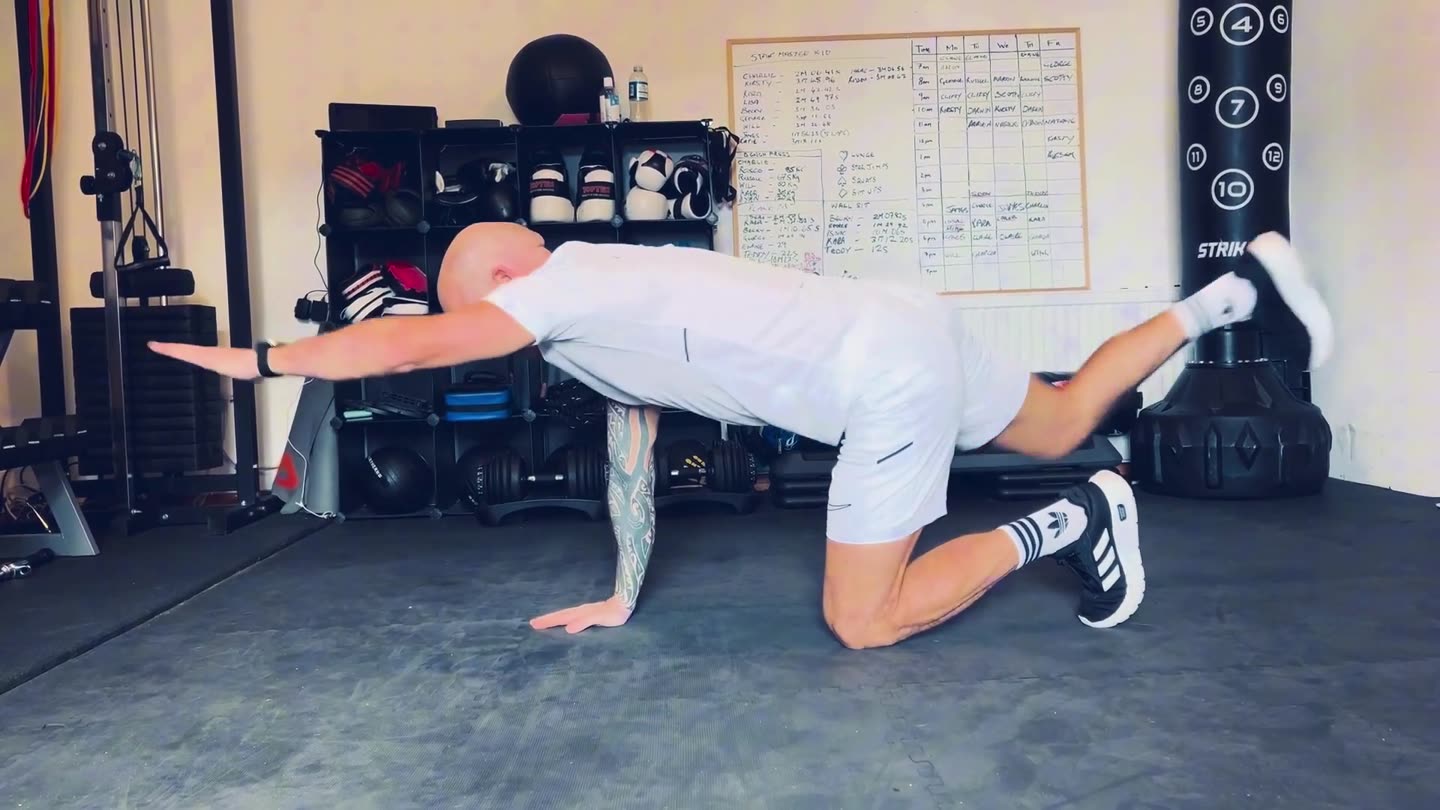
The bird dog, which is the third move. Opposite arm and leg, and no further than that.
What you need
A chair, a bit of floor, and something to put a hand on for balance. That’s the lot. No kit, no gym, and a warm room helps more than you’d expect.
Start with about three minutes of this
Longer than a normal warm-up, which on a ten-minute session means nearly a third of it. That’s deliberate.
- Roll your shoulders backwards, then forwards. Roughly ten each way.
- Ankle circles, sitting down. Ten each foot, both directions.
- Reach both arms overhead, then let them come down. Ten slow ones.
- Stand up and sit back down out of the chair, five times, no rush.
- March on the spot for about a minute.
If the warm-up is all you fancy on a given day, that’s a perfectly good session. It counts.
Then the five moves
Thirty seconds of work, a minute of rest, once through. The order puts the two standing moves first, so you get down onto the floor once rather than five times.
However many reps you get inside the thirty seconds is your number. There isn’t a target.
The rest is the actual work
A minute between moves looks generous written down, and the temptation is to cut it because you feel alright. The minute is what lets you finish in the same state you started, and what keeps Thursday quiet. If you need ninety seconds, take ninety seconds.
Making it smaller
Every one of these shrinks without losing the point.
- Sit-to-stands: use a higher chair, or push off your thighs with your hands.
- Calf raises: hold the worktop properly and come up a couple of inches. Small still works.
- Bird dog: just the arm, or just the leg, rather than both together.
- Press-ups: hands on the worktop or the wall instead of the floor.
- Dead bug: move one limb at a time and keep the range short.
And twenty seconds of work instead of thirty is a real option, not a lesser version of the session.
Then leave it alone
Do this twice in the week with a couple of days between. Then have a look at how you’ve been two days after each one.
Same or better, do exactly this again next week. Rougher than usual, drop to three moves or twenty-second efforts and stay there a while. Either way, nothing changes for two or three weeks, and when it does it’s one thing — a second round, or a bit more work time. Not both.
Good weeks are where this comes unstuck. Feeling decent on a Tuesday and doing it three times is the most common way people end up back at the start. The plan doesn’t change on good days.
On a flare day
Shoulder rolls, ankle circles, and a walk to the end of the road if that’s in you. Two or three minutes. Then pick the session back up whenever you’re ready, at the same place you left it — there’s nothing to make up.
One last thing, plainly: Core Buddy is not a medical device and does not diagnose, treat or prevent any condition. Nothing here is medical advice, and it isn’t a substitute for the care of your GP or specialist. If something new or unusual turns up while you’re training, stop and get it looked at.
Want it timed for you?
Core Buddy counts the work and the rest so you’re not watching a clock, and every move has a video like the ones above. Start on the shortest option and go from there. Free to download, and the 30-day free trial covers the lot.
Written by Ross Geldart — certified personal trainer, founder of Mind Core Fitness in Elgin, Scotland, and the coach in every Core Buddy exercise video. Ross has trained over 200 clients from his Elgin studio and coaches beginners every week.